
Subscribe to the EEA Newsletter and stay up to date on all the latest european excise and tax news.

Change of Tax Jurisdiction for Non-Established Businesses in Czech Republic (from 1 July 2025)
As of 1 July 2025, all businesses not established in the Czech Republic have been placed under the tax jurisdiction of the Customs Office for the Plzeň Region.
This change, introduced by Act No. 349/2023 Coll. (part of the 2024–25 fiscal consolidation package), means that all excise tax, energy tax, and Intrastat obligations for non-established entities must now be handled by this office and its dedicated tax account.

Italy Introduces a Specific Excise Rate for HVO
Italy has introduced a specific excise rate for HVO (Hydrotreated Vegetable Oil), set lower than petrol to make it more competitive. However, not all HVO qualifies: only fuel compliant with EU environmental standards under D.Lgs 43/2025 benefits from the reduced rate, while non-compliant HVO is taxed slightly higher. Refund forms now require hauliers to distinguish between compliant and non-compliant HVO when filing claims.

Guide to Claiming VAT and Import Duty Repayments: Eligibility, Process, and Requirements
Importers or their agents can claim overpaid import duty and VAT within 3 years of the original declaration. Claims are made via CDS online or Form C285 with supporting evidence. HMRC reviews and, if approved, repays to the importer’s account. Keep documentation, comply with deadlines, and audit imports regularly to catch overpayments.

Dutch Tax Plan 2027 – Closing the dairy loophole for non-alcoholic beverages
The Dutch Tax Plan 2026 introduces changes to the national consumption tax on non-alcoholic beverages. From January 2026, the “dairy loophole” will close: drinks with added dairy, previously exempt, will become taxable.

Exemptions from the Tax on Oil Products
Portuguese legislation, with some specificities permitted by EU law, also provides for significant exemptions from petroleum product tax, which are essential for the development of various sectors of activity. These exemptions have evolved from a total absence of exemptions to the existence of various exemptions and rate reductions, but in recent years, as a result of growing environmental concerns and the transition to a green economy, Portugal has eliminated several exemptions from tax on petroleum products and gradually reintroduced taxation on petroleum products for various products used in important industrial sectors.

UK Government Acts to Curb Steel Imports and Prevent Trade Diversions
UK Tightens Steel Import Controls to Prevent Trade Diversions
New measures respond to global trade shifts after US tariff hikes on steel.
Starting 1 July 2025, the UK will implement stricter rules on steel Tariff Rate Quotas (TRQs) to protect domestic markets and preserve traditional trade flows

UK Packaging EPR: 2025/26 Summary Factsheet
UK Extended Producer Responsibility (EPR) in Focus – What You Need to Know for 2025 and Beyond ♻️
From January 2025, UK producers are legally bound under the new Extended Producer Responsibility (EPR) regime, fundamentally changing how packaging waste is managed and financed.

TOBACCO TAX ON ELECTRONIC CIGARETTES
Portugal now taxes all e-liquids used in e-cigarettes—whether with or without nicotine, and whether in refillable or disposable cartridges—based on volume. Strict authorization, regional restrictions, and national transport rules apply due to non-harmonization at the EU level.

AMENDMENT TO CZECH PACKAGING ACT ON HOLD – DEPOSIT SYSTEM FOR BOTTLES AND CANS DELAYED
The Czech Republic has postponed the implementation of a deposit system for plastic bottles and cans, originally set for 2026, due to legislative delays ahead of autumn elections. The proposed system aimed to boost recycling through refundable deposits and additional producer responsibilities, aligning with EU circular economy goals.

BALANCING ITALIAN DUTIES ON FUELS: TARGET 2030
Italy plans to gradually align excise duties on diesel and petrol between 2025 and 2030 to reduce emissions and eliminate environmentally harmful subsidies. Tax incentives will also support the use of sustainable fuels, while commercial diesel use will remain exempt from increases.

B2C IN GREECE: FROM A HARD LAW TO AN EVEN HARDER ONE
Greece has implemented a strict legal framework for B2C distance sales of alcoholic beverages under EU Directive 262/2020, requiring sellers to appoint a Tax Representative and comply with detailed customs, tax, and reporting obligations. This complex system reflects Greece’s autonomous revenue authority’s emphasis on control, compliance, and market protection.

BIODIESEL IN THE EU: BALANCING SUSTAINABILITY AND TRADE POLICY
The EU promotes biodiesel as a renewable energy source, yet enforces strong protectionist trade measures—such as anti-dumping and anti-subsidy duties—against major biodiesel exporters to shield its own industry. This reflects a contradiction between environmental goals and restrictive trade practices in the renewable energy sector.

UK PUBLISHES REQUEST FOR INPUT ON POSSIBLE RETALIATORY TARIFFS
The UK Government launched a consultation on potential retaliatory tariffs in response to US trade measures, publishing an 8,000-line indicative list of low-impact products to guide any future action. The aim is to minimize harm to UK businesses and consumers, with final decisions yet to be made.
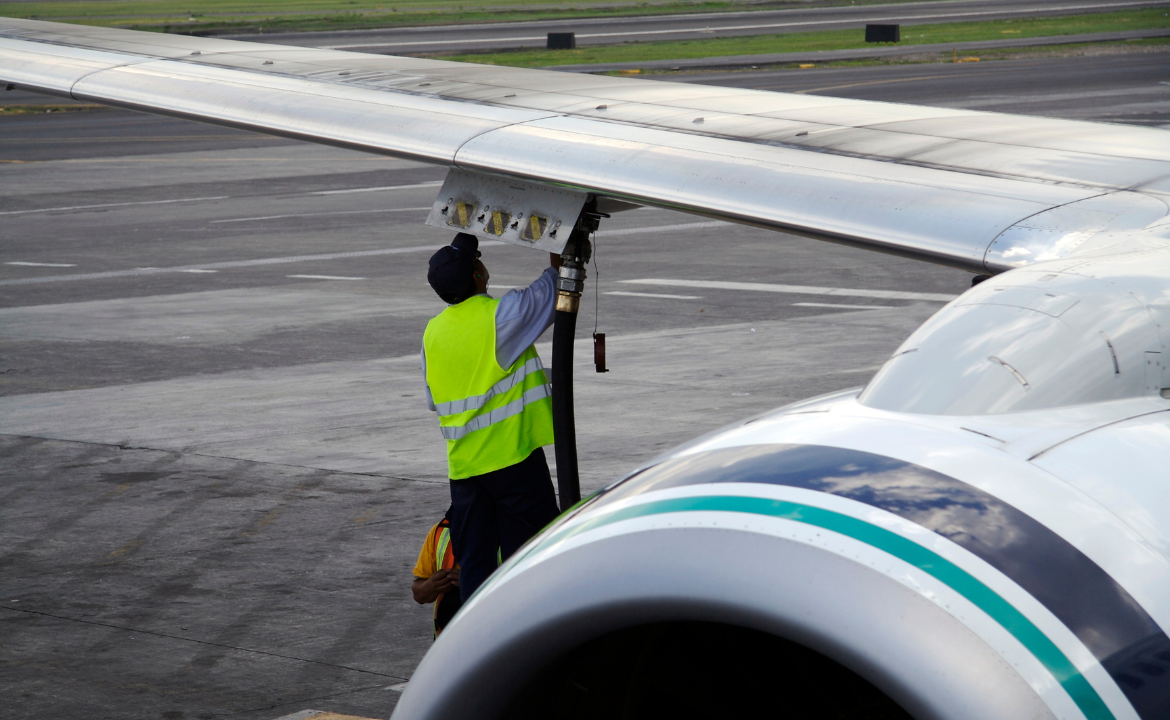
END OF TIRUERT FOR JET FUEL – WELCOME REFUELEU AVIATION!
The transition from the French TIRUERT scheme to the EU-wide ReFuelEU Aviation Regulation marks a pivotal shift in sustainable aviation fuel (SAF) policy. The new framework, effective from 2025, sets progressively increasing SAF and synthetic fuel incorporation targets, imposes stringent reporting obligations, and enforces financial penalties for non-compliance, fostering greater sustainability and accountability across the European aviation sector.

EUROPEAN COMMISSION PROPOSAL ON CBAM SIMPLIFICATION
The European Commission has proposed CBAM simplifications, including an import threshold, deferred costs, and streamlined emissions reporting. These changes aim to ease compliance, especially for SMEs, while maintaining environmental objectives.

UK CARBON BORDER ADJUSTMENT MECHANISM
From January 2027, the UK will introduce a CBAM, imposing a levy on carbon-intensive imports from countries with lower carbon pricing. Businesses should prepare for reporting requirements and potential supply chain impacts.

COMPREHENSIVE AND PROGRESSIVE AGREEMENT FOR TRANS-PACIFIC PARTNERSHIP (CPTPP)
The UK joins the Comprehensive and Progressive Agreement for Trans-Pacific Partnership (CPTPP) in December 2023, granting preferential trade with key markets like Japan and Singapore. Canada and Mexico will follow once they complete ratification.

THE SPECIAL CUSTOMS AND TAX REGIME FOR THE CANARY ISLANDS
The Canary Islands operate under a unique regime outside EU VAT and harmonized excise duties, with local taxes like IGIC and AIEM supporting regional development. Tariff suspensions and reduced excise rates help balance local needs with EU market integration.

TAXATION OF NON-ALCOHOLIC BEVERAGES IN PORTUGAL
Since 2017, Portugal has taxed non-alcoholic drinks with added sugars or sweeteners, with rates varying by sugar content. Exemptions apply to specific products, and companies importing into Portugal must comply with local excise rules.

SOAC: EXCISE DUTY SIMPLIFICATION AND EXEMPTIONS FOR RELIABLE AUTHORIZED WAREHOUSE KEEPERS
Italy’s Soggetto Obbligato Accreditato (SOAC) status, effective 2024, reduces administrative burdens and waives financial guarantees for reliable operators in sectors like energy, alcohol, and tobacco. This measure aims to enhance trade efficiency while maintaining regulatory oversight.