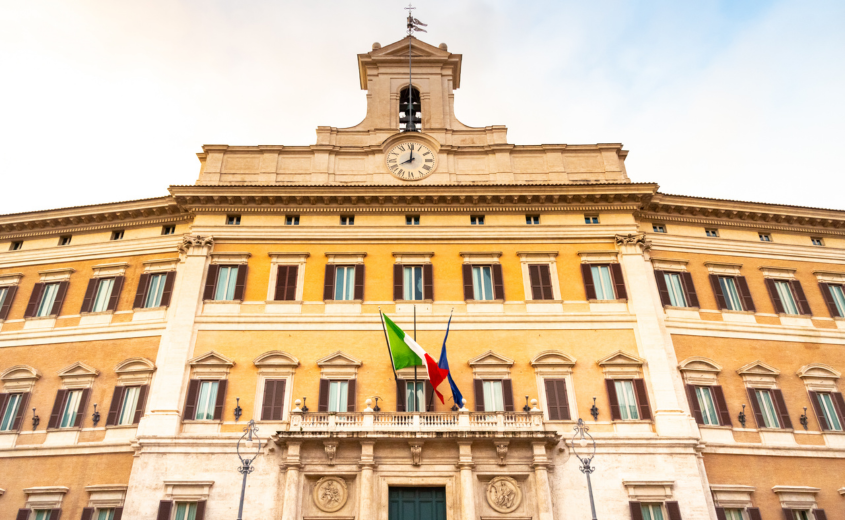
Revision of the Italian Excise Duty Provisions
Effective from 1 January 2026
Legislative Decree No. 43 of 28 March 2025 and Circular No. 13/2025
Legislative Decree No. 43 of 28 March 2025, entitled “Revision of the provisions on excise duties”, introduces significant amendments to Legislative Decree No. 504 of 26 October 1995 (the Consolidated Excise Act). The main changes are summarised below.
1. Security Deposit for Authorised Warehousekeepers
The decree revises the rules governing the guarantee deposit required from authorised warehousekeepers.
The new provision clarifies the time parameter used to calculate the supplementary criterion for determining the amount of the guarantee. Specifically, the deposit may not, in any event, be lower than the arithmetic mean of the monthly excise duty due on releases for consumption carried out during the previous twelve calendar months.
2. Accredited Obligated Subject (SOAC)
The decree introduces the figure of the Accredited Obligated Subject (SOAC).
Recognition as a SOAC allows access to partial or full exemptions from security deposits, as well as specific operational and accounting simplifications, calibrated according to the level of reliability achieved:
Basic
Medium
Advanced (subject to exceeding the minimum required score)
The following entities may apply for SOAC status:
authorised tax warehouse operators (energy products, alcoholic products, manufactured tobacco);
registered companies, or persons authorised to replace them, in relation to coal, lignite, and coke;
sellers or invoicing entities supplying natural gas to final consumers;
sellers or invoicing entities supplying electricity to final consumers.
3. Excise Duty on Natural Gas and Electricity
3.1 Reclassification of Uses of Natural Gas for Combustion
With specific reference to excise duty on natural gas used for combustion, the decree introduces a new classification of intended uses, which determines the applicable tax rates.
The current distinction between “civil uses” and “industrial uses” is replaced by:
Domestic uses
Non-domestic uses
This change aims to ensure clearer identification of the applicable scope.
Domestic use includes, by way of example:
combustion of natural gas in residential buildings;
use in premises of public offices;
filling of vehicle tanks through systems connected to the gas distribution network serving eligible properties.
Compared with the previous framework, the following activities are newly included under non-domestic use:
libraries, art galleries, museums, exhibition halls;
theatres, cinemas, discos, concert and show venues;
restaurants, bars, and entertainment or leisure venues (dance halls, gaming halls, nightclubs, beach resorts, and similar establishments);
physiotherapy clinics and nursing homes;
cremation services;
trade fairs;
laundries, including self-service laundries;
hospitals.
3.2 Consumption Declarations
From 2026, entities obligated to invoice natural gas and electricity to final consumers must submit semi-annual consumption declarations, instead of annual declarations.
Declarations must be filed:
by the end of March, for the semester starting on 1 January; and
by the end of September, for the semester starting on 1 July.
Each declaration must include all information necessary to determine the excise duty liability for the relevant calendar semester.
3.3 New Excise Duty Payment System
For both natural gas and electricity, the excise duty payment system is substantially reformed.
The new system provides for:
monthly excise duty instalments, calculated on the basis of:
quantities sold (as indicated on invoices or billing documents issued in the immediately preceding calendar month), or
quantities self-consumed during the month.
This replaces the current system based on fixed advance payments determined with reference to the tax due in the previous year, followed by an annual adjustment.
4. Establishments Selling Alcoholic Beverages
For the retail sale of spirits (including liqueurs, spirits, alcoholic beverages, fortified wines, and aromatised wines) and beer, the excise duty obligation is deemed to be fulfilled and concluded through the prior notification of commencement of activity submitted to the One-Stop Shop for Productive Activities (SUAP).
5. Production of Ethyl Alcohol from Dealcoholisation Processes
The decree simplifies:
the structural requirements of ethyl alcohol production plants; and
the rules governing assessment and accounting of excise duty.
Wine cellar operators and producers of wine and intermediate products are now expressly permitted to carry out dealcoholisation processes, where ethyl alcohol is obtained directly as a by-product.
In such cases, the excise duty obligation and related tax liability arise at the time the ethyl alcohol is produced, even though it derives from dealcoholisation activities.